
Table of Contents
Introduction
We have all wanted that fresh, lit-from-within look, the kind that makes people quietly wonder whether you have changed something. The truth dermatologists keep repeating is refreshingly simple: glowing skin is far less about expensive products and far more about consistency, sun protection, and patience.
This guide walks you through dermatologist-approved steps in plain language. No miracle promises, no hundred-product routine, just the science-backed basics that genuinely move the needle, along with the honest caveats most beauty ads conveniently leave out.

What Glowing Skin Really Means
Healthy Skin vs an Instant Glow
What Your Glow Really Depends On
The Dermatologist-Approved Daily Routine
Cleanse Gently
Moisturise to Support the Barrier
Sunscreen, Every Single Day
Exfoliate, But Don't Overdo It
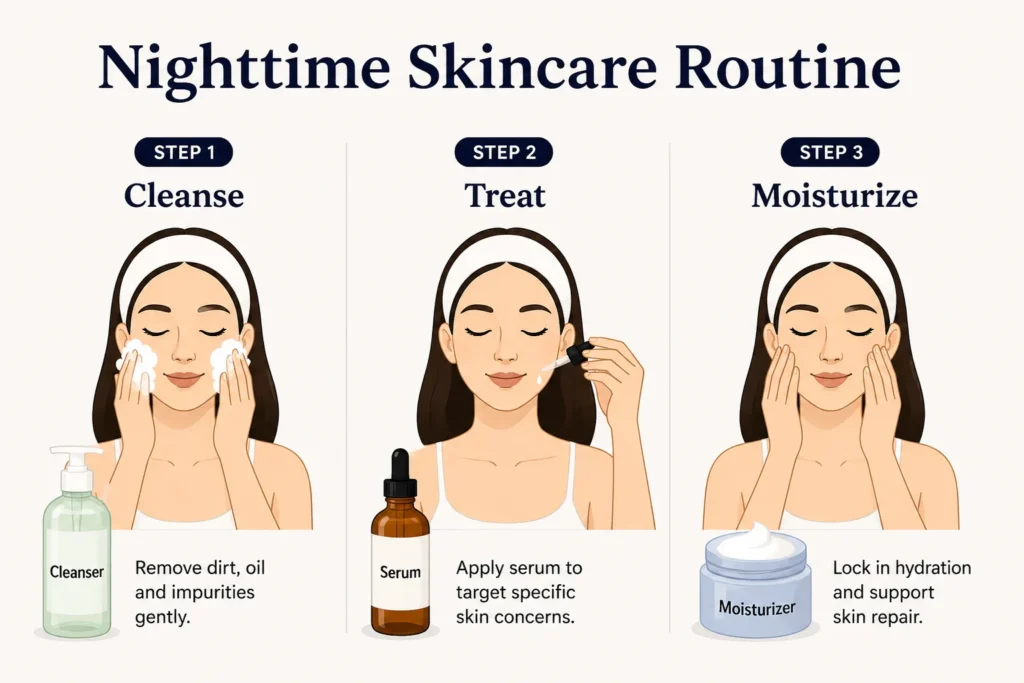
A Simple Night Routine
The Ingredients That Actually Work
This is where expertise truly matters, because shelves are crowded with hype and clever marketing. A handful of well-studied actives genuinely support glowing skin: vitamin C brightens and fights free radicals; niacinamide calms redness and refines the look of pores; hyaluronic acid floods the skin with moisture; and retinoids boost cell turnover and collagen for smoother, more even skin over the months. You do not need all of them at once, introduce one at a time and give it room to work.
Always patch-test a new active and add products gradually rather than all together. Layering several strong ingredients at once is one of the most common routes to irritation, and inflamed skin never looks its best. When in doubt, simpler is almost always safer for your complexion.
Diet, Sleep, and Lifestyle
Skincare from a bottle is only half the story. What you do away from your bathroom shelf shows up clearly on your face over time.
Stay hydrated and lean into a diet rich in antioxidants colourful fruits, vegetables, nuts, and omega-3 sources all support glowing skin from the inside out. Diets very high in sugar and heavily processed foods, on the other hand, can gradually dull your complexion and trigger breakouts in some people.
Your skin does most of its repair work while you sleep, so consistent rest genuinely matters more than any overnight mask. Chronic stress and poor sleep raise cortisol, which can fuel both breakouts and a tired, lacklustre look. Regular movement boosts circulation, and that healthy post-workout flush is a small, free glow in itself.
Common Mistakes That Dull Your Complexion
Sometimes the fastest route to better skin is simply doing less of the wrong things. The usual culprits dermatologists see again and again are:
- Skipping sunscreen, then wondering why pigmentation refuses to fade.
- Over-exfoliating or piling on too many active ingredients at once.
- Switching products every few days before they get any real chance to work.
Cutting out these habits alone can visibly improve clear, healthy skin within just a few weeks, often with no new products at all.
Tips for Your Skin Type
There is no truly universal routine, so it helps to adapt to what you actually have.
Choose lightweight, non-comedogenic, gel-based formulas and consider a salicylic acid (BHA) exfoliant. Crucially, do not skip moisturiser, balanced hydration actually helps calm excess oil rather than worsening it.
Reach for creamier, fragrance-free moisturisers and gentle, hydrating cleansers. Introduce activities slowly, one at a time, and prioritise repairing the skin barrier over aggressive treatments that promise fast results.
Myths vs Facts
Conclusion
A good at-home routine handles most everyday needs, but some concerns persistent acne, stubborn pigmentation, or melasma respond far better to professional care. In-clinic options such as medical-grade facials, chemical peels, or a HydraFacial can speed up results safely when they are guided by a qualified expert. If your skin simply is not improving despite months of consistent effort, that is your cue to get a professional assessment rather than keep guessing. A dermatologist can read your skin accurately, rule out underlying issues, and recommend prescription-strength options that over-the-counter products cannot match. It saves you both money and the frustration of buying product after product that was never going to solve the actual problem.
If you want dermatologist-led guidance and treatments tailored to your face, Blissdrbabariya offers expert skin consultations and proven in-clinic options. Book a consultation and build a personalised plan for healthy, glowing skin instead of endless trial and error.