
Table of Contents
Introduction
Your skin tells your story, and when something feels wrong, whether it is persistent acne, sudden hair fall, stubborn pigmentation, or simply a growing desire to look your best, the first person you want on your side is a qualified, trustworthy dermatologist. But here is the uncomfortable truth: not every clinic that calls itself a “skin clinic” or every person who calls themselves a “skin expert” is actually qualified to treat you safely.
Choosing the right dermatologist near you is one of the most important health decisions you will make for your skin and hair. The wrong choice can cost you money, time, and in some cases, cause irreversible damage. The right choice, on the other hand, can be genuinely life-changing.
This guide walks you through seven expert tips, informed by real clinical standards and the gaps most people overlook,so you can find a skin specialist who is not just close to home, but truly the best fit for your specific concern.
1. Understand Your Skin or Hair Concern Before You Search
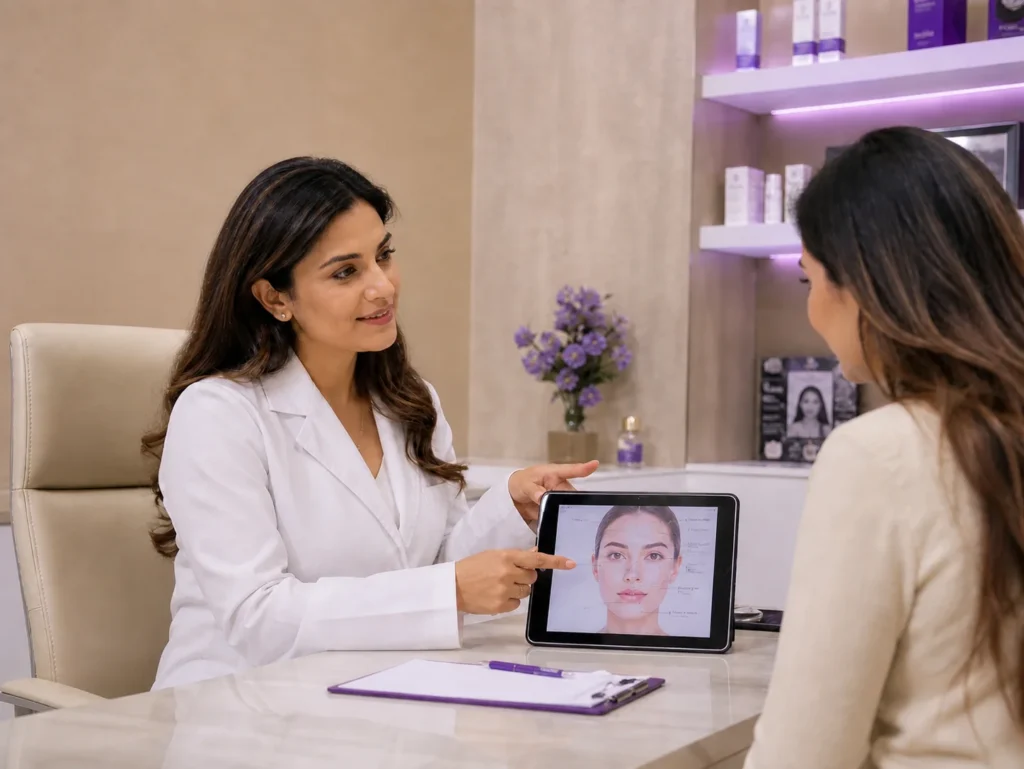
Before you type “best dermatologist near me” into Google, take a moment to define exactly what you are looking for. Dermatology is a broad field, and different specialists focus on different areas. Going to the wrong type of clinic for your concern is one of the most common and costly mistakes patients make.
Skin and hair concerns broadly fall into three categories. Medical dermatology deals with conditions like acne, eczema, psoriasis, hair loss, fungal infections, and pigmentation disorders,all of which require accurate diagnosis and often prescription treatment. Cosmetic dermatology focuses on appearance-related concerns such as anti-aging, laser treatments, Botox, fillers, and skin brightening. Surgical dermatology handles procedures like mole removal, scar revision, and in some cases, skin cancer excision.
Knowing your primary concern helps you narrow your search dramatically. If you are a woman in her late twenties dealing with hormonal acne and pigmentation, you need a specialist who understands the connection between your skin and your hormonal health,not just someone who can give you a generic chemical peel. If you are a man dealing with receding hairline or beard thinning, you need a specialist experienced in scalp health, PRP therapy, or hair regrowth treatments, not just cosmetic facials.
Key Takeaway: The more specific you are about your concern, the better equipped you will be to choose a skin specialist who can actually solve it.
2. Verify Qualifications and Certifications : This Is Non-Negotiable
India’s cosmetic and dermatology landscape has exploded in recent years, and with it, the number of unqualified practitioners offering “skin treatments” in fancy-looking clinics. One of the first things you must check is whether the doctor treating you holds legitimate medical qualifications.
What to Look for in a Qualified Skin Specialist in India
In India, a genuine dermatologist or aesthetic physician will typically hold an MBBS as a base degree, followed by advanced specialization such as MD in Dermatology, DNB, PGDCC (Post Graduate Diploma in Clinical Cosmetology), or MD in Aesthetic Medicine. These qualifications indicate that the doctor has completed structured medical training specifically in skin, hair, and cosmetic procedures, not just a short weekend certification course.
Many clinics in India employ technicians or therapists to perform laser treatments, PRP, or chemical peels without a qualified doctor being present on-site. This is both unsafe and unethical. Always confirm that a board-certified doctor will personally oversee or perform your treatment, especially for advanced procedures.
Pro Tip: Do not hesitate to ask the clinic to share the doctor’s qualifications. A reputable specialist will always be transparent about their credentials.
3. Prioritize Experience : Especially With Your Specific Concern
A qualification tells you what a doctor knows. Experience tells you what they can do. When it comes to skin and hair treatments, hands-on clinical experience matters enormously. Advanced procedures like laser skin resurfacing, subcision for deep acne scars, PRP for hair regrowth, or Botox and dermal fillers require precision that only comes with years of practice.
When evaluating a dermatologist, look specifically for experience with your concern. Ask how many patients they have treated for your condition. Ask to see before-and-after results. A confident, experienced specialist will have no hesitation sharing these. If a clinic avoids this question or shows you vague, unverifiable results, that is a warning sign.
Years in practice also matter when it comes to recognizing subtle complications early and adjusting treatment plans accordingly. A doctor with 15+ years of clinical experience will approach your skin differently from someone who has been practicing for two years, their diagnostic instincts, their knowledge of how Indian skin types respond to treatments, and their ability to customize protocols all deepen significantly with time.
4. Evaluate the Technology and Equipment Being Used
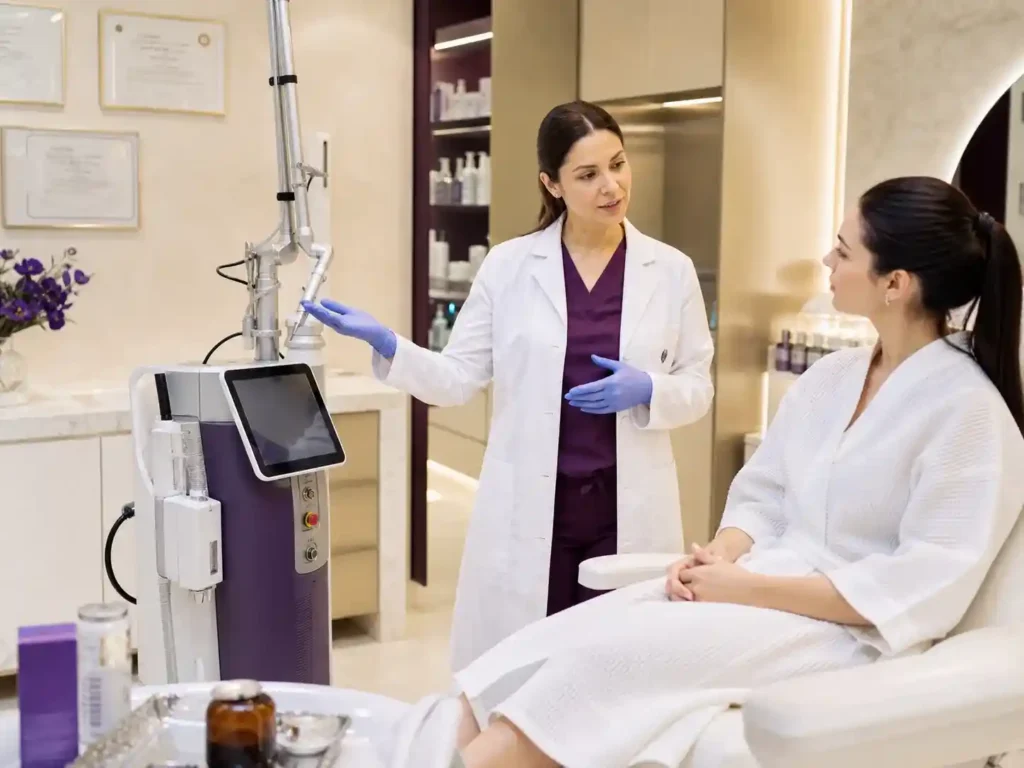
The tools a dermatologist uses are just as important as their knowledge. Skin and hair treatments have evolved rapidly, and the best clinics use US-FDA approved machines and medically certified products that are proven both safe and effective.
When you visit a clinic, do not be shy about asking what technology they use for your procedure. For laser treatments, what is the device model? Is it FDA-cleared? For PRP therapy, is the centrifuge medically certified? For chemical peels, are the formulations pharmaceutical-grade? These are not unreasonable questions, they are the right ones. A quality dermatologist will welcome them.
Outdated or unbranded equipment increases the risk of side effects, uneven results, and skin damage, particularly for people with Indian skin tones, which can be more prone to post-inflammatory hyperpigmentation if treated with the wrong laser settings or unverified products.
Why it matters for you: Certified, modern technology means safer procedures, better accuracy, faster recovery, and more consistent results, especially for complexion-sensitive treatments.
5. Read Patient Reviews : But Know How to Read Them Smartly
Online reviews on Google, Justdial, or Practo can give you a meaningful window into the real patient experience at any skin clinic. But not all reviews are equal, and knowing how to read them critically will save you from being misled.
Look for reviews that describe specific results rather than generic praise. A review that says “my acne scars improved significantly after three sessions of microneedling” tells you far more than one that simply says “great doctor, very helpful.” Specific reviews signal that real treatment happened with real outcomes. Also look at the volume and consistency of reviews over time, a large number of genuine reviews over several years is a stronger signal than fifty reviews appearing in a single month.
Pay particular attention to how the clinic responds to negative reviews. A doctor and team that responds professionally, with empathy and accountability, demonstrates a culture of genuine patient care. One that dismisses complaints or responds defensively should give you pause.
6. Your First Consultation Is a Two-Way Interview
Think of your first dermatology consultation not just as an assessment, think of it as an interview that goes both ways. You are evaluating the doctor just as much as they are evaluating your skin. This mindset will protect you from rushing into a treatment plan you do not fully understand.
A trustworthy dermatologist will take time during your consultation to ask about your medical history, current medications, lifestyle habits, and your specific goals. They will explain the diagnosis clearly, walk you through your treatment options with realistic expectations, and answer your questions without making you feel rushed. If you feel pressured into purchasing a package on your very first visit, that is a major red flag.
Questions to Ask at Your First Dermatology Consultation
- What is the exact diagnosis and what is causing my skin or hair concern?
- What treatment options are available, and which do you recommend for me and why?
- What results can I realistically expect, and in what timeframe?
- What are the potential side effects or risks with my skin type?
- Will you personally perform the treatment, or will a technician?
- What is the follow-up care plan after the procedure?
These questions are not just helpful,they reveal the character of the dermatologist. A confident, ethical specialist will welcome every single one of them.
7. Watch Out for These Red Flags in Any Skin Clinic
The skincare industry, particularly in India, has a significant number of clinics that prioritize revenue over results. Learning to spot red flags can protect your skin, and your wallet.
- Guaranteed results: No ethical dermatologist will promise you a guaranteed outcome. Skin responds differently for every individual.
- No consultation before treatment: A clinic that wants to start a procedure before conducting a proper skin assessment is not operating responsibly.
- Unusually low prices: Deeply discounted treatments often mean compromised equipment, substandard products, or underqualified staff.
- Pressure to buy packages upfront: Quality clinics earn long-term loyalty through results, not advance sales tactics.
- No visible doctor credentials: If the clinic cannot or will not display the treating doctor’s qualifications, treat it as a serious warning.
- One-size-fits-all treatment plans: Skin is deeply personal. Any clinic offering the exact same protocol to every patient is not giving you personalized care.
Your skin deserves better than a rushed, cookie-cutter approach. The right clinic will take time, ask the right questions, and treat your concern with the depth and precision it requires.
Why Bliss Skin & Cosmetic Clinic Checks Every One of These Boxes
If you are searching for the best dermatologist near you in Surat, Dr. Jigar Babariya at Bliss Skin & Cosmetic Clinic is a name that consistently meets the highest standards across every criterion covered in this guide.
Dr. Babariya holds a Bachelor of Homoeopathic Medicine & Surgery (BHMS) along with a PGDCC (Post Graduate Diploma in Clinical Cosmetology) from ILAMED and an MD in Aesthetic Medicine,making him one of the most academically and clinically qualified Aesthetic Physicians and Clinical Cosmetologists in Gujarat. With over 15 years of hands-on clinical experience, he brings precision, depth, and genuine patient-first values to every consultation.
At Bliss Skin & Cosmetic Clinic, treatments are performed exclusively using US-FDA approved machines and pharmaceutical-grade products. Whether you need advanced acne scar treatment, PRP therapy for hair regrowth, laser skin resurfacing, Botox and fillers, or a customized skin brightening protocol,every treatment begins with a detailed consultation and ends with a personalized follow-up plan.
What truly sets Dr. Babariya apart is his commitment to ethical, transparent, and science-backed care. There are no inflated promises, no pressure-selling, and no generic protocols. Every patient receives a treatment plan designed around their specific skin type, concern, lifestyle, and goals. The results speak for themselves,as evidenced by hundreds of real patient transformations and consistent five-star reviews from men and women across Surat.
For bridal clients preparing for their most important day, for young professionals battling acne and pigmentation, for men experiencing early hair thinning,Bliss Skin & Cosmetic Clinic is a destination where clinical excellence meets compassionate care.
Ready to take the first step? Book your consultation with Dr. Jigar Babariya at Bliss Skin & Cosmetic Clinic today. Visit blissdrbabariya or call +91 76982 72376.
Conclusion
Finding the best dermatologist near you is not just about proximity,it is about finding a qualified, experienced, and ethical specialist who sees your skin concern the way you do: as something deeply personal that deserves the very best care. Use the seven criteria in this guide as your checklist, ask the right questions at your consultation, and trust your instincts when something does not feel right.
Your skin is with you every single day. Invest in it wisely. And when you are ready to experience what truly personalized, medically sound skincare looks like, the team at Bliss Skin & Cosmetic Clinic in Surat is ready for you.
FAQ's
A dermatologist is a qualified medical doctor who has completed MBBS followed by a specialization in skin, hair, and nail conditions. A cosmetologist or aesthetic physician holds advanced post-graduate training in cosmetic treatments but may or may not hold an MBBS degree. In India, always confirm the doctor’s exact qualifications and registrations before undergoing any clinical skin or hair treatment.
Look for qualifications such as MBBS with MD/DNB in Dermatology, PGDCC from accredited institutions like ILAMED, or MD in Aesthetic Medicine. Verify their registration with the State Medical Council. A certified professional will always be transparent about displaying their credentials at the clinic and on their website.
Bring a list of your current medications and supplements, any previous skin or hair test reports, a brief description of when the concern started and what you have already tried, and if possible, photos documenting the progression of your concern over time.
The number of sessions varies significantly depending on the condition and treatment type. Acne treatments may show improvement in 4 to 8 weeks. Laser-based scar treatments typically require 3 to 6 sessions. PRP for hair regrowth usually involves monthly sessions for 3 to 6 months. A personalized treatment plan from your dermatologist will give you a realistic timeline based on your specific case.
Absolutely. Dermatology is not gender-specific. Men commonly seek treatment for hair fall, beard thinning, acne, oily skin, dark circles, and skin texture concerns. Many leading skin clinics now offer customized treatment protocols specifically designed for men’s skin and hair needs.